
Fuel additives
Prevent disruption, protect your fuel supply and vehicles, increase performance efficiency and reduce maintenance with fuel additives.
Request a callbackWhat Are Fuel Additives?
Fuel additives are chemical compounds that can enhance the performance of engine whilst boosting the fuel economy of your engines and machinery.
Fuel additives to suit your business
Through long-standing partnerships with some of the industry’s most reputable and market-leading additive manufacturers, Certas Energy is proud to offer an extensive range of high-quality fuel additives for your business needs. Whether you’re looking to enhance fuel efficiency, improve engine performance, or reduce maintenance costs, our reliable and competitive fuel and additive supply ensures your operations keep running smoothly, day in and day out.
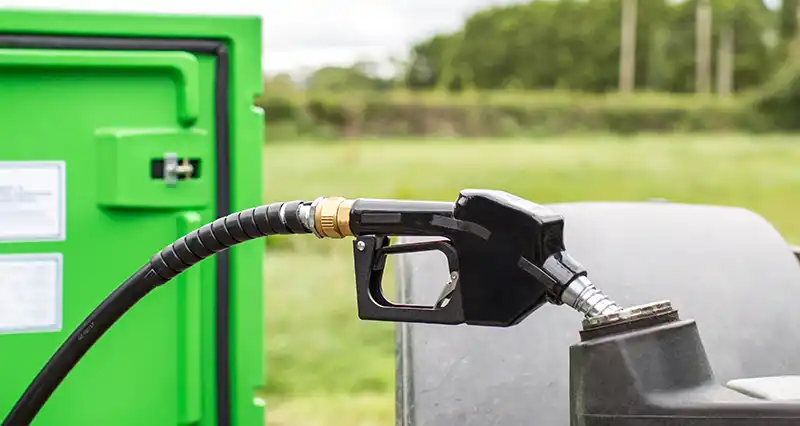
Fuel Additives
Problem Solvers
Fuel additive products that act to minimise the effect of field problems associated with ever-changing base fuel.
Diesel Defender
Diesel Defender fuel additive is a liquid anti-theft marker dye permitted for use in UK non-rebated fuel, typically known as white diesel, road diesel or DERV. The liquid blue dye colours white diesel to produce a green fuel, making it distinguishable from white diesel for personal use.
It acts as a powerful deterrent to thieves, improving traceability, impacting resale value, and exposing non-commercial use.
It can be used in a wide range of applications, including construction equipment, cooling or heating units in road and rail transport, airport vehicles, forklift trucks, electricity generation and heating for commercial premises.
Tank stickers can be supplied on request to advertise that the fuel has been dyed to prevent theft.
Features:
- No issues with identification, quantification, and classification of marked rebated fuels.
- Notified with HMRC.
- No interference with statutory markers so will not give false positive results on any roadside tests.
- Unique chromatic profile distinct from statutory markers and does not impede their measurement.
- Complies with Regulation 14(3) of the Hydrocarbon Oil (marking) Regulations 2002.
When to use:
- To demonstrate importance of operational investment on site.
- To show that fuel use is being closely monitored and can be traced.
- If there is a fear or suspicion of theft by external persons or internal staff.
- With each fuel delivery.
Fuel Additives
Fuel Enhancers
Use fuel additives to upgrade fuel quality, improve equipment efficiency and avoid potential operational problems whilst substantially enhancing performance.
Gas Oil Supreme
Gas Oil Supreme is an advanced fuel additive designed to benefit both mineral diesel and biofuel blends. It is a gas oil (BS2869:A2) upgrade product formulated to allow modern diesel engines calibrated on EN590 DERV to run on red diesel. It prevents deposit formation throughout the fuel delivery system, especially in the injectors and fuel pump, to keep the system clean and running at optimum performance. It also compensates for some of the deleterious effects of a higher FAME content e.g. tendency for water pick-up. The product will additionally enhance the performance of older vehicles.
The Benefits:
- Increased Cetane Number: This enables easier starting, increased pulling power and smoother power delivery. It reduces visible emissions (smoke) and improves combustion efficiency whilst aligning with modern engine calibrations.
- Reduced Deposit Formation: Keeps injectors clean in high pressure and prevents injectors sticking and over fuelling. It maintains injector spray pattern and prevents nozzle coking in older engines. It both reduces fuel consumption and emissions while protecting against corrosion.
- Increased Fuel Lubricity: Compensates for sulphur reduction, protecting against premature wear in fuel pumps and fuel injectors and also reduces friction.
- Enhanced Water Resistance: Prevents emulsions forming and resultant filter blockages, keeping water out of the fuel.
When to use gas oil supreme?
- The FAME content of the fuel is known to have increased.
- Vehicle lacks power.
- Misfires or ‘runs rough’.
- Engine manufacturer recommends the use of an additive.
- Excessive smoke is observed.
- Fuel is being used in a tier III or later vehicle (typically post 2005).
what a the risks of not using fuel additives?
- New engines and boilers are not suited to current fuel quality
- Fuel sulphur reduction has, through a series of unintended consequences, caused quality problems
- Fuel imports and the use of cheaper components have resulted in poorer quality fuels
- Environmental targets are calling for higher quality fuels
- Fuel additives can aid fuel economy and performance
- Variable bio-diesel production quality
- Outdated fuel specifications
- Prevent FAME related disruption
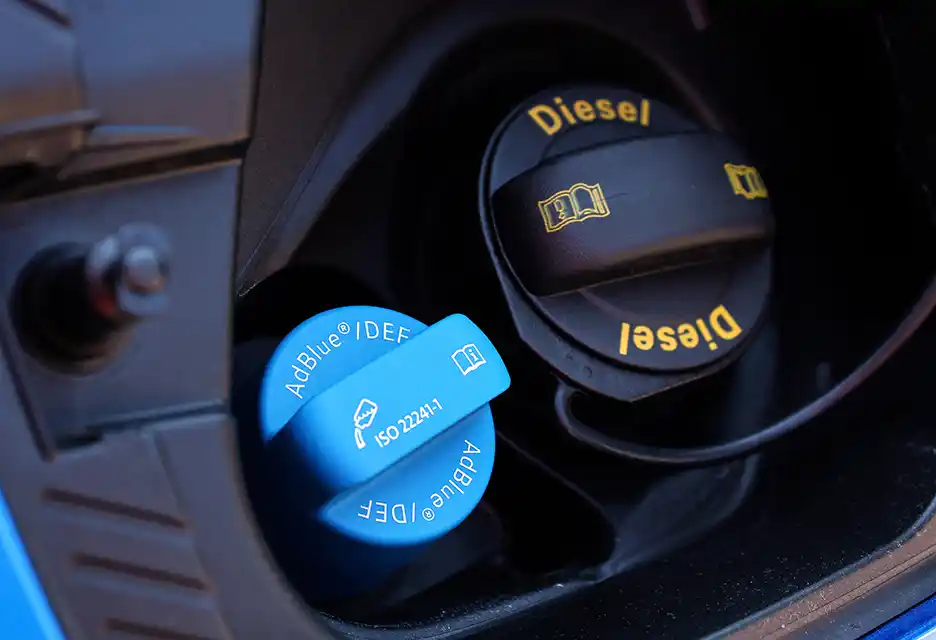
Fuel Additives prevent FAME-related disruption
Have you heard about the industry-wide RTFO changes to biofuel (FAME) levels in gas oil and road diesel? Discover what FAME is, how the regulations have changed and how to prevent FAME-related disruption with our range of fuel additives and FAME-free fuel alternatives in our free guide to FAME.

Find your local Certas Energy team.






Get in touch
Let us know what you are looking for via this form and one of the team will be in touch to help you with more information.
By giving your email details, you confirm that you are happy for us to notify you of offers and services by email. We won’t bombard you – tell us at any time if you want to unsubscribe. Don’t worry – we respect your data. We keep it securely and responsibly, we only release it in accordance with the law; otherwise we don’t pass on. See our privacy policy for more details. If you’d like to have a chat about data protection, email the Data Protection Officer at [email protected]
Latest News

Helpful Guides for Commercial Customers
Important updates to the SAF & RTFO feedstock list
The Department for Transport (DfT) has published an updated list of feedstocks eligible under the Renewable Transport Fuel Obligation (RTFO) and Sustainable Aviation Fuel (SAF) Mandate. The updated renewable fuel mandate outlines which materials can be used to produce low-carbon and renewable fuels – and its aim is to support the UK’s transition towards net-zero. This is a huge boost to low-carbon fuels […]
– Certas Energy

Certas Energy News
Middle East and Fuel Supply
As you are no doubt aware, the events currently taking place in the Middle East are of concern, causing great uncertainty, and this is also having an impact on the wider energy industry.
– Certas Energy

Helpful Guides for Commercial Customers
A Guide to Scope 1-3 emissions for your fleet
Reducing your fleet’s carbon emissions is likely to be one of your top priorities for 2026. Carbon emissions are often emitted across a company’s entire operations. Yet, many businesses only focus on reducing the emissions they directly produce. To combat this, the terminology Scope 1, 2, 3 emissions was introduced by the Greenhouse Gas (GHG) Protocol, highlighting how carbon emissions are emitted across a business’s entire value chain. In this guide, we’ve broken down why Scope 1, 2 and 3 […]
– Certas Energy


